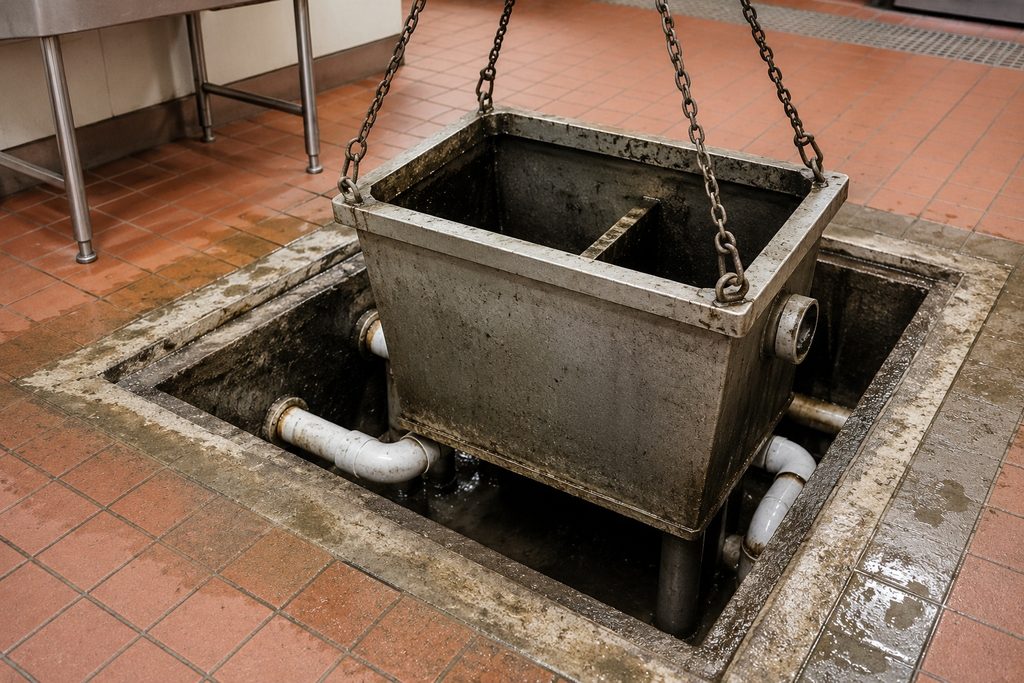
Grease traps are designed to keep fats, oils, and grease from moving directly into commercial drainage systems. In busy restaurants, cafeterias, food-service facilities, and other commercial kitchens, these systems can handle large amounts of wastewater every day. Continuous use can eventually lead to buildup, worn components, drainage restrictions, or other problems that affect normal operation. Recognizing when a grease trap needs attention can help businesses avoid unnecessary interruptions. Grease Trap Repair Services in Houston, TX can be considered when a trap begins showing signs that cleaning and routine maintenance are no longer enough to keep it working properly.
What Happens When a Grease Trap Stops Working Properly?
A grease trap that is not functioning correctly may affect more than just the equipment itself. When grease and wastewater are not separated effectively, excess material can move toward connected drainage lines and contribute to restrictions. The trap may also begin filling faster than expected, reducing its ability to handle incoming wastewater. As the condition develops, kitchen operations can become less convenient and drainage-related problems may become more noticeable. Understanding these changes can help business owners recognize that a trap may require inspection or repair rather than simply another cleaning.
How Can Drainage Changes Reveal a Trap Problem?
Changes in drainage performance can provide an early indication that something is wrong. Sinks may empty more slowly, wastewater may take longer to pass through connected lines, or occasional backups may occur during periods of heavy kitchen activity. These symptoms can have several causes, including grease accumulation, restricted pipes, damaged components, or problems within the trap itself. Instead of assuming that slow drainage is only a cleaning issue, businesses can have the system evaluated to identify the actual source. Early attention may help prevent a developing restriction from becoming a larger operational problem.
Why Should Leaks Around the Trap Be Checked?
Leaks can develop when connections, seals, fittings, or structural parts of a grease trap become damaged or worn. Even a small amount of escaping wastewater or grease should receive attention because continued use can place additional pressure on the affected area. Leaks can also create unpleasant conditions around kitchen equipment and may contribute to sanitation concerns. A careful inspection can help determine whether the issue is limited to a particular component or connected to a larger problem within the drainage system. Addressing the source rather than only cleaning the surrounding area is important for lasting results.
What Factors Can Lead to Grease Trap Damage?
The condition of a grease trap can be affected by how frequently it is used and how much grease enters the system. High-volume kitchens naturally place greater demand on their drainage equipment. Pouring cooking oils or excessive grease into sinks can also increase accumulation, while food particles may contribute to additional residue. Over time, repeated exposure to heavy buildup can affect internal components and reduce available capacity. Aging equipment, delayed maintenance, and problems with connected drainage lines can further contribute to poor performance and may eventually make Grease Trap Repair Services in Houston, TX necessary.
How Can Businesses Reduce Future Grease Trap Problems?
Repairing an existing issue is only one part of maintaining a dependable grease management system. Businesses can support better performance by following appropriate waste-disposal practices, keeping up with scheduled cleaning, and paying attention to changes in drainage or odors. When unusual symptoms continue after routine maintenance, Grease Trap Repairs TX can help businesses determine whether the equipment needs further attention. Addressing small concerns before they become major failures can help reduce disruption to daily kitchen operations. Consistent care also makes it easier to identify worn components and other developing problems before they significantly affect the drainage system.